
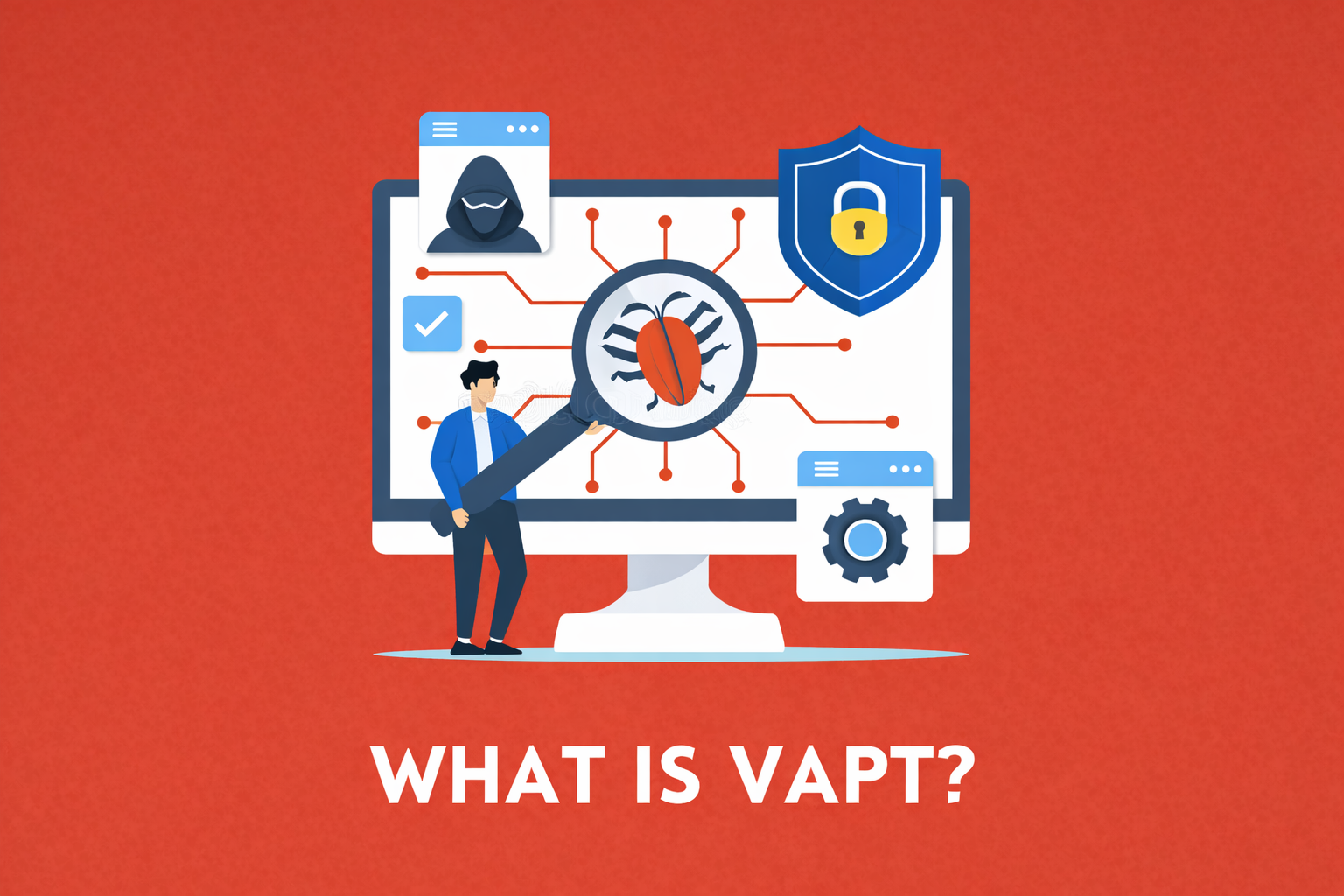
What is a vulnerability assessment?
A vulnerability assessment identifies and evaluates potential security weaknesses in an organization’s systems. It involves scanning for vulnerabilities, analyzing results, and reporting findings to improve security posture. This helps organizations detect threats before they are exploited and reduce exposure across networks, systems, applications, and devices.
Unlike purely reactive security approaches, a structured assessment gives leadership, IT teams, and security stakeholders a clearer understanding of where the business is exposed and what should be fixed first.
Vulnerability assessment vs. penetration testing
Vulnerability assessments and penetration testing are distinct but complementary practices. Vulnerability assessments focus on identifying and reporting weaknesses. Penetration testing simulates real-world attacks to exploit those weaknesses and evaluate how effective current defenses are in practice.
When combined as VAPT, organizations gain both visibility and validation: what weaknesses exist, and which of them can actually be exploited in a real attack scenario.
Why VAPT matters for Kenyan enterprises, financial institutions and growing businesses
As organizations in Kenya become more dependent on branch connectivity, cloud platforms, customer-facing applications, digital finance, mobile access, and integrated systems, the attack surface continues to grow. Financial institutions, SACCOs, insurers, healthcare providers, public institutions, and growing businesses need to understand where they are exposed before disruption happens.
VAPT helps answer practical leadership questions: Which weaknesses matter most? Which systems are business-critical? Which vulnerabilities create audit, fraud, compliance or downtime risks? Where should remediation begin?
Types of vulnerability assessments
- Network-based assessments for routers, switches, firewalls, open ports, and infrastructure misconfigurations.
- Host-based assessments for servers, workstations, endpoints, and operating system weaknesses.
- Web application assessments for SQL injection, cross-site scripting, insecure authentication, and logic flaws.
- Database assessments for weak credentials, excessive privileges, outdated software, and insecure configurations.
- Wireless assessments for weak encryption, rogue access points, and Wi-Fi exposure.
- Physical security assessments for server rooms, access control gaps, surveillance, and facility exposure.
- Mobile device assessments for insecure apps, outdated mobile OS versions, and weak policy enforcement.
- IoT and embedded system assessments for smart devices, industrial systems, and embedded technologies with limited built-in security.
The vulnerability assessment process
1. Preparation and planning
This phase defines scope, objectives, systems to be assessed, stakeholders involved, and risk priorities. Clear planning keeps the engagement focused on critical systems and business needs.
2. Vulnerability identification
Automated tools are used to identify known weaknesses quickly and consistently. Manual testing complements this by uncovering issues scanners may miss, including context-specific weaknesses and logical flaws.
3. Vulnerability analysis and risk assessment
Findings are analyzed for severity, exploitability, and business impact. This step matters because not every technical issue deserves the same urgency or response.
4. Prioritization
High-risk vulnerabilities with severe impact and easier exploit paths are prioritized first. This helps organizations focus resources where risk reduction will be most meaningful.
5. Remediation and improvement
Organizations patch systems, improve configurations, strengthen controls, and refine processes. The value of VAPT is realized when findings translate into actual security improvement.
Five critical best practices for effective vulnerability assessments
- Map vulnerabilities to business-critical processes. Assess weaknesses in terms of operational impact, downtime, compliance risk, and financial exposure.
- Perform authenticated scans for deeper insights. These reveal risks tied to permissions, internal misconfigurations, and outdated systems that unauthenticated scans may miss.
- Create a custom threat model for each environment. Every enterprise environment has a different risk profile and attack surface.
- Scan for configuration errors, not just software flaws. Weak defaults and poor segmentation can create major exposure even when software is patched.
- Validate vulnerabilities manually to reduce false positives. This improves confidence in the report and keeps remediation focused on real threats.
What organizations should do next
Regular assessments should not be one-time exercises. As environments change and threats evolve, organizations need continuous review, remediation, monitoring, and improvement. The strongest posture comes from building assessment into a broader security management cycle.
If your organization needs a clearer view of cyber exposure, the next step is to engage in a scoped cybersecurity assessment and align the findings with business priorities, executive risk visibility, and remediation planning.